1. Site Selection and Logistic Analysis
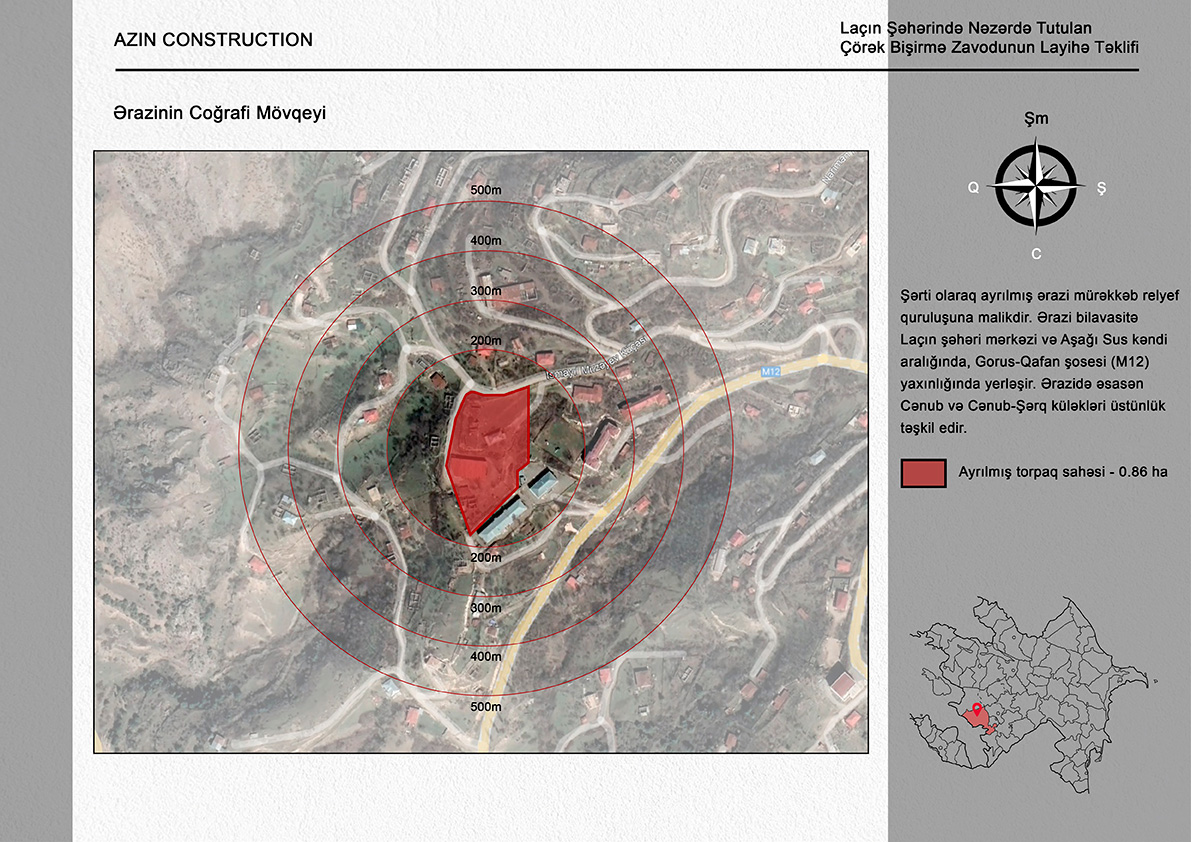
At the beginning of the project, we first analyzed a land plot of 0.86 hectares located between the center of Lachin city and the village of Ashagy Sus, near the Goris–Gafan highway (M12). The advantages of this location:
-
Transport Accessibility: Proximity to the M12 highway facilitates the transportation of raw materials and the distribution of finished products.
-
Central Position: Proximity both to the city center and to surrounding villages speeds up delivery to the consumer.
2. We Turned the Complexity of the Terrain into an Advantage
The complex terrain structure of the area could have created difficulties at first glance. However, we turned this into an opportunity:
-
Terraced Construction: The slope allowed us to place different functional zones of the plant in a stepped manner. This facilitates product flow using the natural incline.
-
Panoramic View: Placing administrative and social facilities at higher points will serve as an additional source of motivation for employees.
3. Influence of Climatic Conditions on the Plant Design
Considering that southern and southeastern winds prevail in this area:
-
Natural Ventilation: The direction of the winds was taken into account to ensure natural air circulation in the production workshops. This reduces energy consumption and creates a healthy environment for workers.
-
Dust and Odor Control: The wind direction was calculated so that flour dust and production odors are not carried towards residential areas.
4. Architectural and Planning Solutions
We applied modern approaches in the plant's design:
-
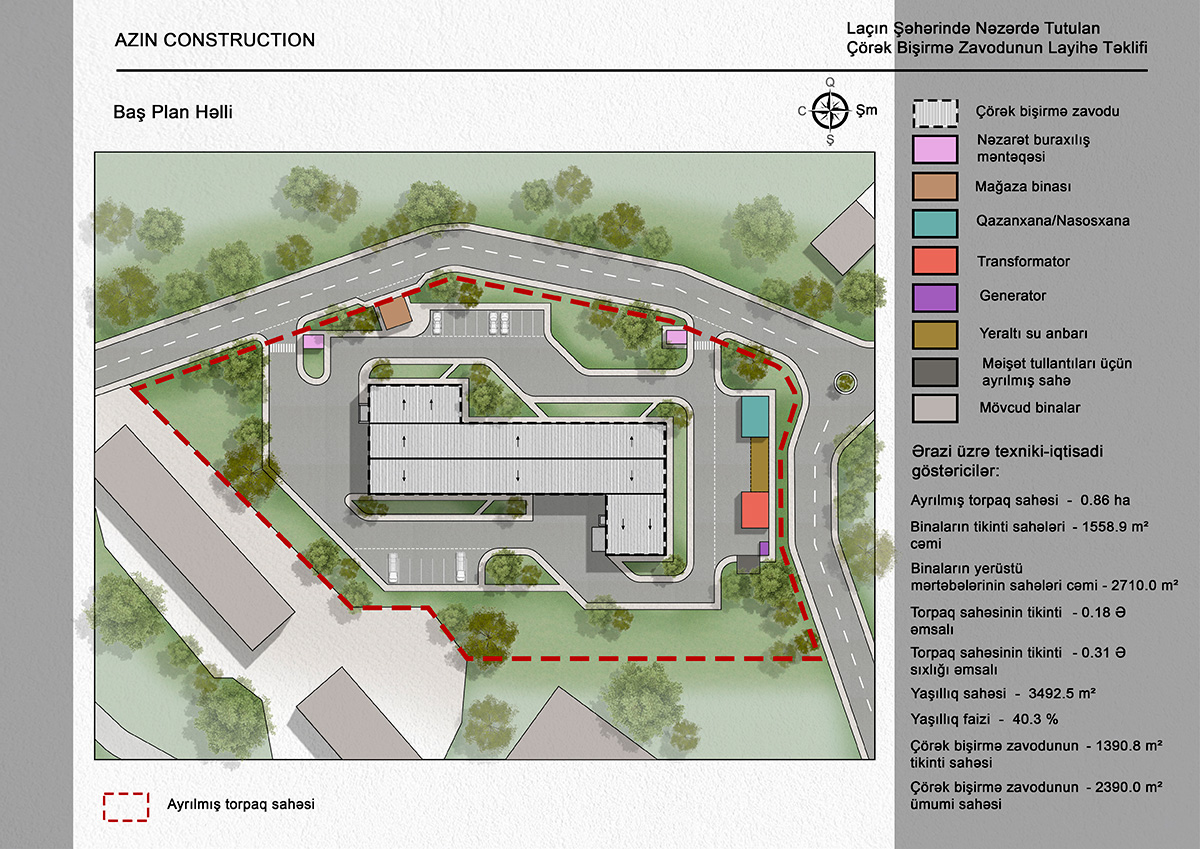
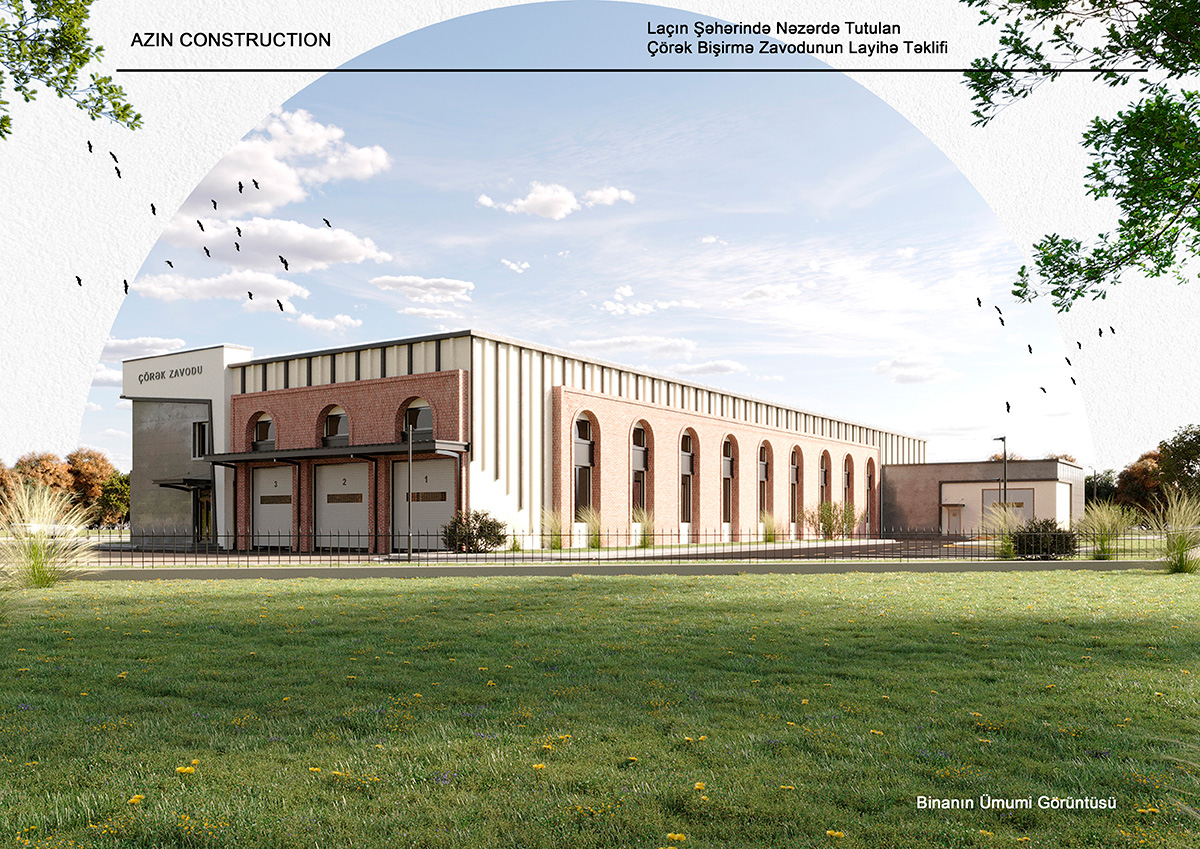
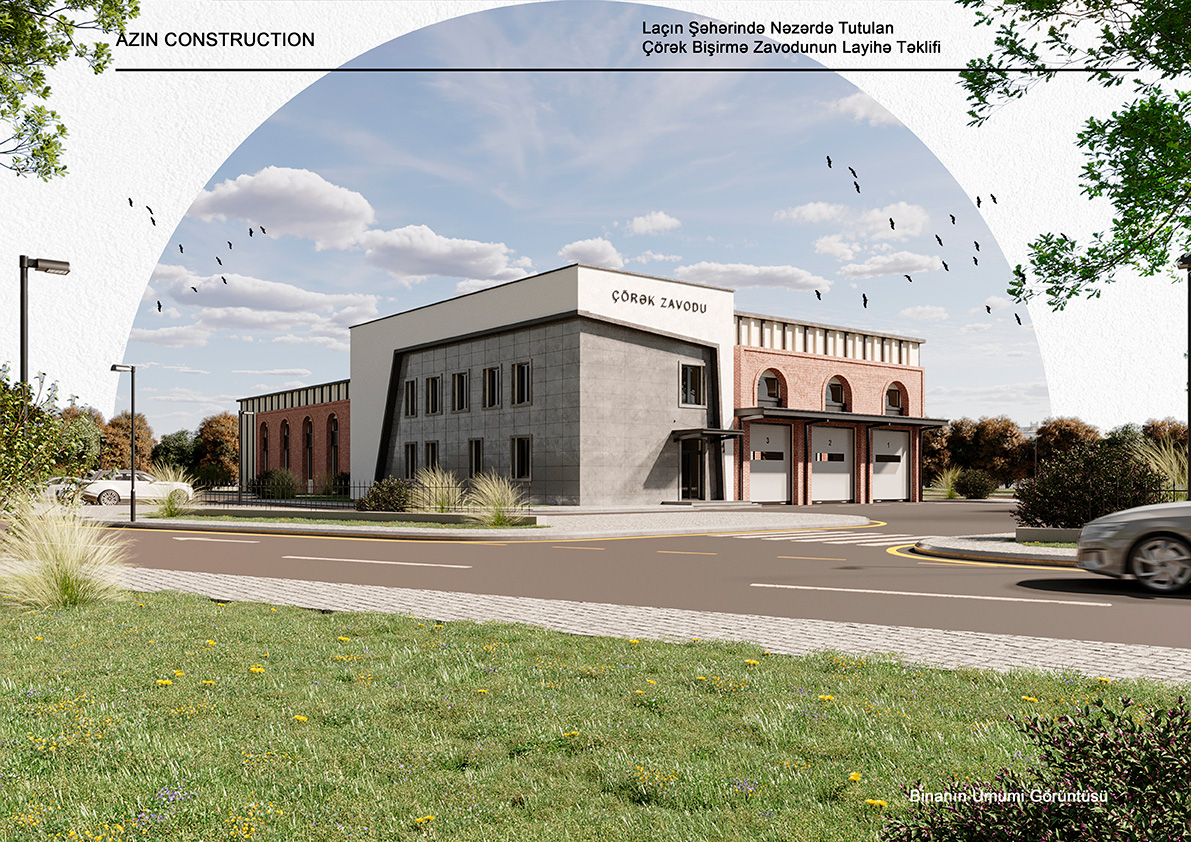
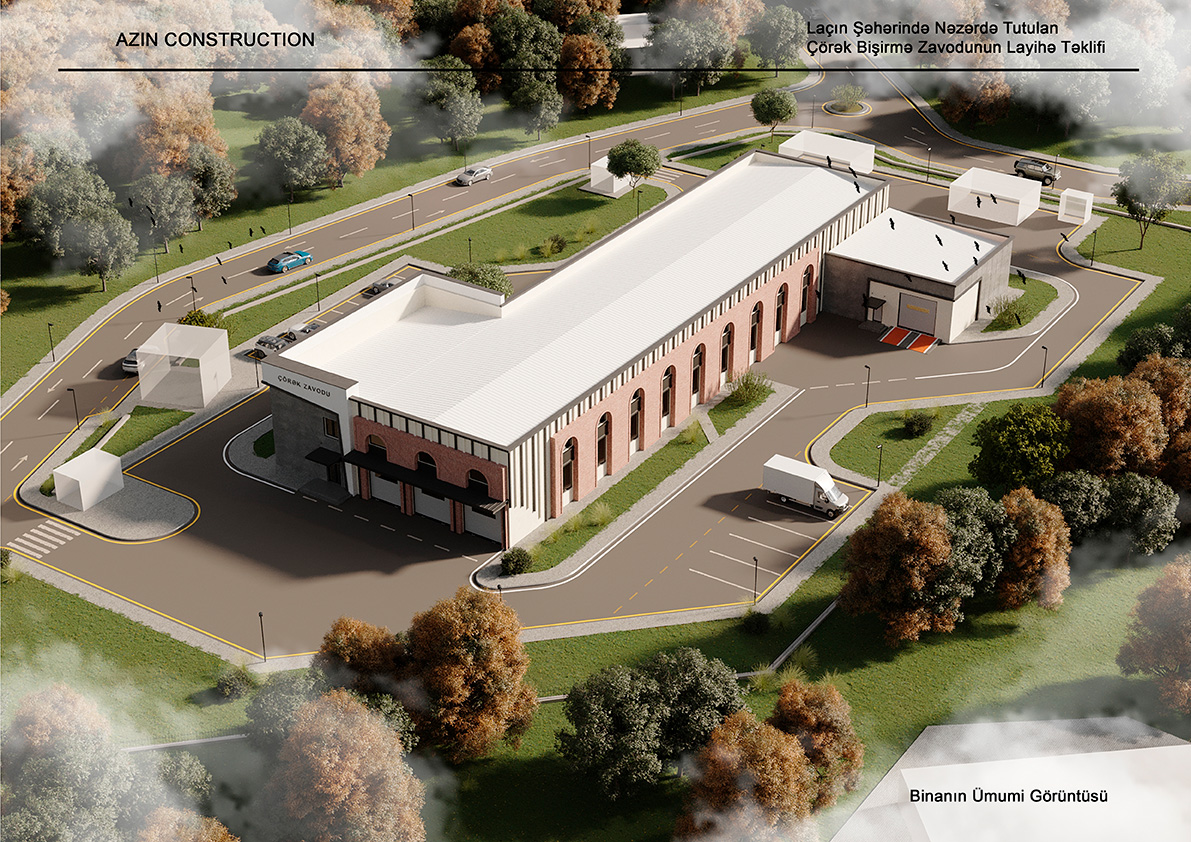
Functional Zoning: The territory is divided into three main zones — production zone, warehouse zone, administrative and social zone.
-
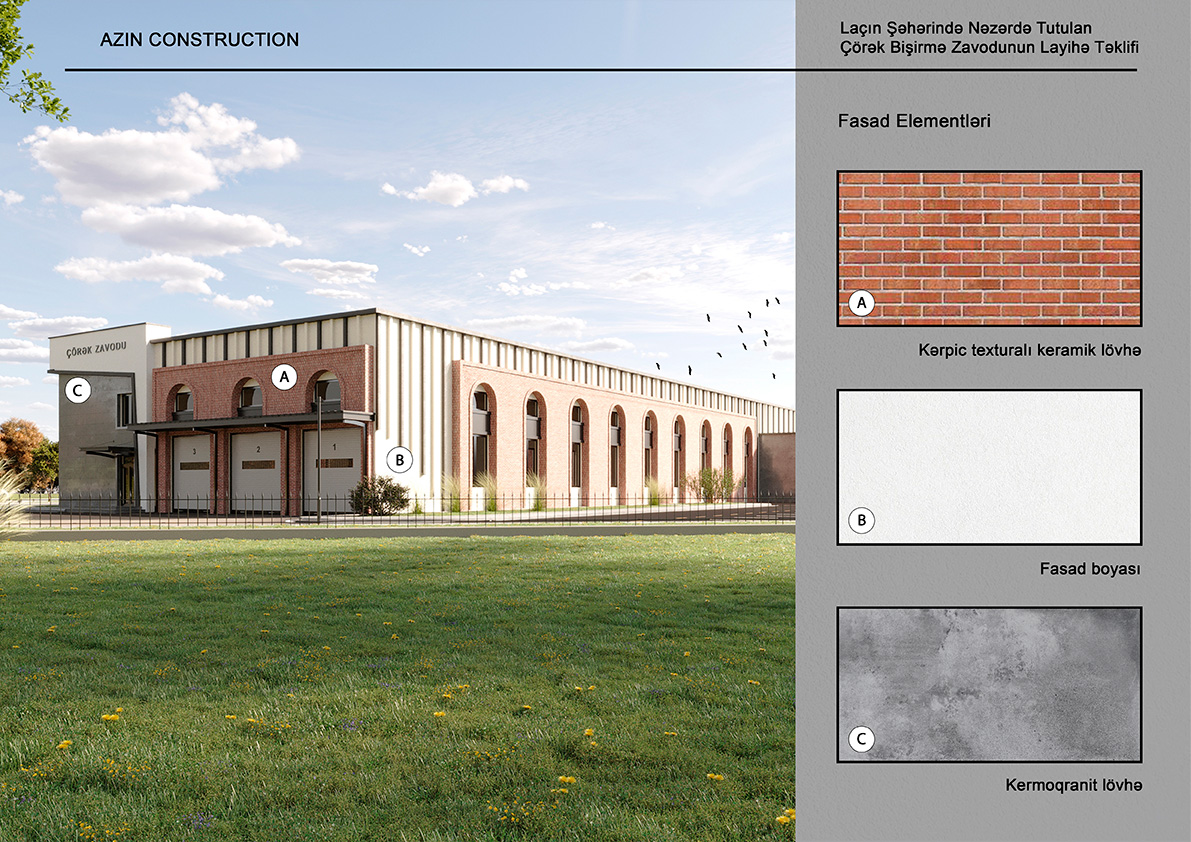
Energy Efficiency: Wide glazed facades on the south side allow maximum use of natural light. Solar panels are also planned on the roof.
-
Sanitary Requirements: For product safety, raw material and finished product flows do not cross; clean and dirty areas are strictly separated.
5. Environmental Adaptation and Landscaping
To avoid harming nature:
-
The existing terrain was preserved as much as possible, with earthworks kept to a minimum.
-
A green belt is planned around the plant. This will reduce wind strength and mitigate the environmental impact of production.
-
Rainwater collection and its reuse for technical purposes are foreseen.
Conclusion
The concept of the proposed bread-baking plant in the city of Lachin has been developed with the aim of contributing to the region's development. The complex terrain and climatic features became not a drawback of the project, but its unique advantage. As a result, a modern, efficient, and environmentally sustainable plant will provide the residents of Lachin with fresh bread and create conditions for the emergence of new jobs in the region.